

Sex, Sexuality & Queerness
What are some experiences around sexuality and queerness that relate to child sexual abuse? What are some harmful assumptions you risk making to someone disclosing to you?
Main Video
Questioning your sexuality, narratives around disclosing and coming out, physiological responses to abuse... regardless of whether you define as queer, these are all incredibly important narratives that affect many people who were sexually abused as children. But what are some additional barriers and experiences which particularly relate to queer people? Join Sophia (she/her) and Irish psychotherapist Dr Ray O'Neill (he/him) as they discuss.
Your Hosts

Sophia — Founder of Secrets Worth Sharing
Sophia (she/her) is a survivor of child sexual abuse, designer and the founder of Secrets Worth Sharing, where she builds a community of having these difficult conversations with 'serious joy'.
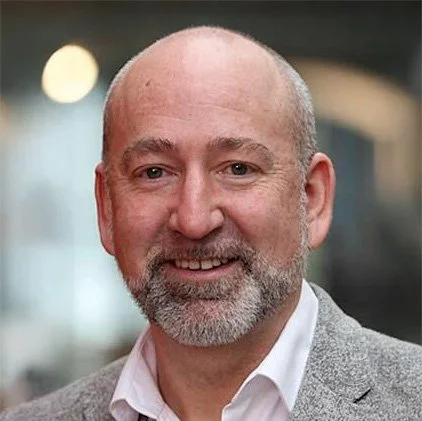
Dr Ray O’Neill - Assistant Professor in Psychotherapy
Ray (he/him) is Assistant Professor in Psychotherapy with DCU's School of Nursing, Psychotherapy and Community Health and a Psychoanalytic Psychotherapist in private practice working mainly, within the LGBTQ community and survivors of sexual abuse.
Bonus Content: Dos and Don’ts Video
What should you say when someone tells you they've been abused as a child, and how does this change if the person is queer? Join Sophia (she/her) and Irish psychotherapist Dr Ray O'Neill (he/him) as they discuss.
Don’t like YouTube? Listen on Spotify Instead
To recap
Things you should say/do
-
This type of statement is called witnessing. Witnessing is an act of being in the other person's presence, which was likely absent during the person's abuse. With a statement like this, the other person has freedom, the other person has time, they're not being demanded, but they see that you have a desire to know more about what they went through. There was no one who witnessed it or chose to witnesses it at the time. You can communicate that you are 'with' the person and on their side, through eye contact or through touch, if appropriate, such as a hug. Try to make sure that the person knows they are not on their own anymore because it is literally the loneliness of going through this experience as a child which adds to the pain.
-
It's okay if you don't know what to say, because sometimes we are totally blindsided for a thousand different reasons. It's okay to admit that you don't know what to say, as we are not socialised to talk about abuse often. For many years, the person who's just disclosed to you doesn’t know what to say. It’s okay as long as you make an effort to make sure that this isn't the only conversation you have about the person's abuse, and ask them if this is a conversation they want to explore together.
-
Someone still might want to explore sex and intimacy, even if they have been sexually abused in the past. The only way you will know is if you ask them.
Things you shouldn't say/do
-
Trying to use someone's abuse as a way to explain their identity is flawed, and trying to find an 'excuse' for the person to explain parts of their identity can be particularly damaging where queerness is concerned. Psychologically, cause and effect is complicated. For one person, trauma might be a reason to explain certain parts of their identity, for others it's much more complex than that. There just might be a reason why something is the way they are and it has nothing to do with the abuse. Don't look for that to explain every question you have about a person. If you feel the need to explore this question, ask a more general version of the question like "how do you think the abuse has had an impact on you?".
-
Some abusers use homophobia, transphobia and queerphobia to their advantage to try and justify their actions. They try and think of something that is also historically controversial and then just completely divert non-abusing adults’ attention onto that. Some groups can compare queerness and child-sex offenders to further harmful, queer-phobic and anti-trans/drag queen messaging. It is important to remember that being queer, gay or trans has nothing to do with being an offender, and questioning sexuality does not at all condone abuse. Exploring queerness between consenting adults is a beautiful and natural thing, and is not at all the same as abusing a child who cannot consent.
-
Sorry is one of those catch all words that people use to kind of cover every kind of awkward situation. Unfortunately, you're not the person that should be sorry. Sometimes, it can feel a bit of a lazy response and highlights to the person that you don't know what to say or do. “Thank you” is a much, much more affirmative word to say to someone. So try saying “thank you for trusting me. Thank you for telling me that”.
-
Just acknowledge what somebody has done and just thank them instead of making assumptions.
-
In some more conservative cultures, children can be brought up to be extra attentive to dressing modestly. While there are many reasons for this, one negative consequence is that from a young age, the child feels responsible for how other adults sexually perceive them. For some survivors, it can take a really long time to undo that thinking and realise that, actually, what they wore did not cause their abuse and they were not responsible for it. We need to think about how we bring up our children and how we encourage them to have conversations about their body and how they're sexualized, and who is sexualizing them.
-
Intimacy is part of all of us. It's something that we all want to enjoy and have a right to enjoy, as well as have moments where we have boundaries. Sometimes, we ask about sex and touch out of fear of hurting our friends and partners and express this clumsily and hurtfully. A more helpful way of phrasing that is “how would you like to be touched?” “Is it okay if we touch? Can we explore this together?” It's all about having questions that are more openers and conversation starters, instead of assumptions.
Additional resources and tips
Wolfenden Report (mentioned by Ray), which recommends that: "homosexual acts between two consenting adults should no longer be a criminal offence".
There are additional resources specifically for queer communities and people in our resources page.
*Please note - in sharing resources mentioned by our co-hosts, we are not necessarily endorsing all of their content, but we do so to allow you to make up your own mind.
Production Crew / Special Thanks
Thank you to Quyen and Jeremie for shooting our original series of podcasts at X & Y offices in Whitechapel.
