

Black Men
How can the harmful stereotypes surrounding Black Men prevent recognition, understanding and healing from sexual abuse?
Main Video
Join Sophia and filmmaker Davy as they discuss disclosing as an adult, remembering the past, adultification biases, and the journey to healing.
Your Hosts

Sophia — Founder of Secrets Worth Sharing
Sophia (she/her) is a survivor of child sexual abuse, designer and the founder of Secrets Worth Sharing, where she builds a community of having these difficult conversations with 'serious joy'.
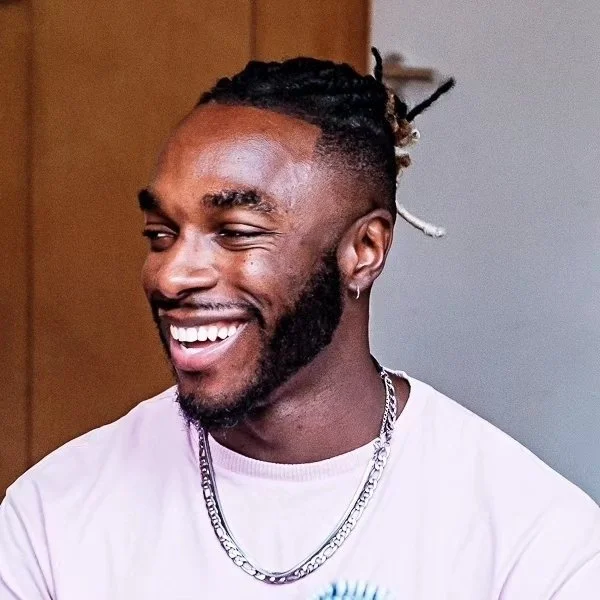
Davy Lazare - Filmmaker and Spoken Word Poet
Davy (he/him) is an award-winning filmmaker and spoken word poet. He's run workshops in filmmaking for serving prisoners and his short film 'You Fit The Description' has won three awards, including BAFTA Qualifying British Urban Film Festival.
Bonus Content: Dos and Don’ts Video
Discussions on allyship, organisations and advice for Black men.
Don’t like YouTube? Listen on Spotify Instead
To recap
Things you should say/do
-
There are only a handful of non-profits in the UK who focus on male survivors of childhood sexual abuse, and very few focus on men of colour and particularly Black men. Write to charities, lobby governments, and use evidence from reports (see links below) to demand services that are more familiar and appropriate for Black men.
-
Try to let go about the baggage and pressure of what a Black man is supposed to be. Davy talks about how it has taken him some time to come to terms with his identity and accept care, support and kindness from others when talking about feelings and past experiences. Remember that other Black men are also survivors - Ben Hunt wrote an article about Black male survivors and rapper Hardy Caprio disclosed his own experiences of abuse in 2023 and there are articles about these experiences to explore online.
-
Acknowledge that these conversations are difficult but so important, as ignoring someone's race and similar conversations diminishes a whole element of the survivor's life and the way they experience and process their abuse. Remember that Black men are not a monolith and everyone can react to things differently. Having a similar background means that there is more likely to be similarities, but that doesn't mean we are all the same.
Things you shouldn't say/do
-
Often, out of shock or horror or disgust, people want to fix a problem and offer options to the survivor, but that might not be a possible angle for them. For example, the police are a very loaded institution in a lot of Black cultures due to the systematic racism in the sector, and so asking a Black man why they haven't gone to the police about the abuse may dismiss generational trauma around how police have historically treated Black men in the UK. Take time to understand the person's challenges and what sorts of support they might need. It might just be to feel heard, or it might be to talk to a therapist instead of reporting to the police.
-
There are many racialised communities in the UK, and while there are similarities in how they access support, there are also many differences, both within each culture and how they are perceived by others. For example, some ethnic groups with lighter skin tones are less likely to experience colourism, a form of racism against individuals with a dark skin tone. Therefore, a solution or approach which works well with those communities might not apply to Black communities who often experience colourism. If recommending resources, always make sure you have some that feel most appropriate to the survivor based on their needs.
-
Davy talks about how in Black communities, it can be easy to get used to dealing with a situation on your own if you have had multiple experiences of oppression by systems and services. Because of this, there can be additional pressure not to speak out of fear of making your community or race 'look bad'. He reminds us that the main cause of death for men under 55 in the UK is suicide. He urges us to do away with this thinking. Try to find someone or a space that you trust where you can start to talk about abuse. Remember that there should be no shame in experiencing abuse. Instead, direct that shame. He encourages finding someone you can trust - in church, in the family, a friend or someone slightly detached from the situation, and practice having these conversations with them.
Additional resources and tips
Academic Jahnine Davis on discussing Child Q
Child sexual abuse of African, Asian and Caribbean heritage children: A knowledge review, gives a breakdown of different racial communities in the UK and how they contributed to a report
Rapper Hardy Caprio talking about his sexual abuse with Chuckie
You Fit The Description – Stills from Davy's Film
The Alienist (TV Series 2018–2020) - IMDb
Child Q: Met officers could be sacked over schoolgirl's strip-search - BBC News
Ben Hunte - Why Abused Black Men are staying silent
Talking therapies: Types and advice - Mental health
*Please note - in sharing resources mentioned by our co-hosts, we are not necessarily endorsing all of their content, but we do so to allow you to make up your own mind.
Production Crew / Special Thanks
Camera and Sound - Davy Lazare!!
Editing and Subtitles - Tom Eames
Special thanks to Utopia's Do The Right Thing Fund, as without their funding we would never have met! (we won't talk about the fact the promised funding was later withdrawn....)
